Strength training is a game-changer for basketball players at every level from middle school gyms to NBA arenas. While shooting, dribbling, and court vision get most of the spotlight, strength is what allows players to play faster, jump higher, absorb contact, and stay healthy through a long season.
This guide breaks down how basketball players should train for strength, why it matters, and how to do it the right way without getting bulky or losing agility.
Why Strength Training Matters in Basketball
Basketball is an intense sport that requires power, speed, balance and durability. Gamers run, put on brakes, turn, jump, land, and fight over ground- hundreds of times in one match.
Proper strength training helps basketball players:
- Rebounds and blocks Higher up jump higher.
- Quick on drives and fast breaks.
- Take a stand against physical defenders.
- Minimize the risk of injury (knees, ankles, lower back, shoulders)
- Perform late in seasons and games.
Strength isn’t just about lifting heavy weights it’s about producing force efficiently and safely.
Key Strength Qualities Basketball Players Need
It is significant to know the kind of strength that is relevant in basketball before going into the exercises.
Lower Body Strength
The performance of basketball is based on strong legs. They make vertical jumps, sprint speed, and defensive slides and quick stops.
Core Strength
The central body is what links the lower and upper body. The core gives a good balance, consistency in shooting and control in contact.
Upper Body Strength
The strength of the upper body assists in completing the task by contact, powerful passing, rebound, and defensive physical power.
Explosive Power
Basketball is not slow strength it is fast. Players should be able to use strength in a fast manner, particularly when making jumps and when taking the first steps.
Strength Training Principles for Basketball Players
Train for Performance, Not Bodybuilding
Basketball players are not supposed to train like bodybuilders. It is aimed at functional strength and not muscle size.
Focus on:
- Compound movements
- Full-body coordination
- Athletic ranges of motion
Prioritize Movement Quality
Technique is a more important factor than heavy weights. Poor form enhances the risk of injury and restricts transfer of performance to the court.
Balance Strength and Mobility
Power that lacks flexibility results in rigidity. Basketball players have to remain flexible, fluid and reactive.
Lower Body Strength Training for Basketball
Essential Lower Body Exercises
Squats (Back Squat, Front Squat, Goblet Squat)
Squats build overall leg power and strength.
Benefits:
- Improves jumping ability
- Develops hip and knee stability
- Enhances force production.
Deadlifts (Trap Bar or Romanian Deadlift)
The deadlifts reinforce the posterior chain- glutes, hamstring and lower back.
Benefits:
- Increases sprint speed
- guards against knee injury
- Enhances general athletic strength.
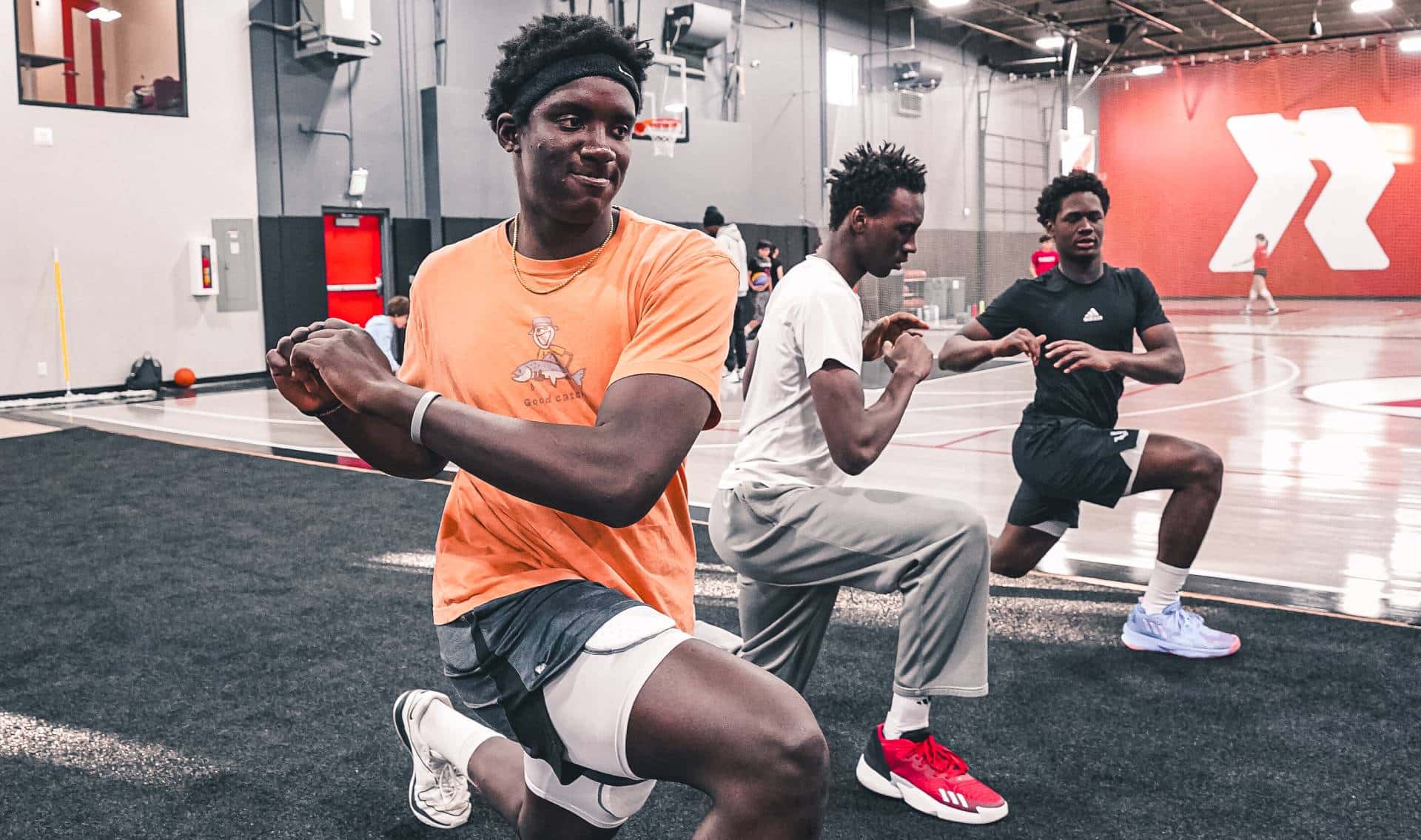
Lunges and Split Squats
The importance of single-leg strength is that basketball moves are hardly symmetrical.
Benefits:
- Enhances coordination and balance.
- Reduces injury risk.
- Passes directly to the movement of the ball.
Plyometrics: Turning Strength Into Power
Strength alone isn’t enough. Basketball players have to transfer the power to explosive power.
Best Plyometric Exercises
- Box jumps
- Broad jumps
- Depth jumps
- Lateral bounds
Guidelines:
- Perform after warm-up or before heavy lifts.
- Concentrate on quality representatives, not on exhaustion.
- Keep volume moderate.
Plyometrics teach the body to apply force quickly essential for jumping and quick direction changes.
Core Strength Training for Basketball Players
It is not only the abs but the hips, lower back, and obliques are also involved.
Key Core Exercises
Planks and Side Planks
Develop a base of stability.
Pallof Press
Enhances anti-rotating strength which is essential in shooting and passing.
Medicine Ball Rotational Throws
Work explosive core power in drives and passes.
Why Core Strength Matters:
- Better balance on jump shots
- More control during contact
- Better defensive positioning.
Upper Body Strength Training
Performance should be facilitated by upper body strength and not drag players back.
Key Upper Body Exercises
Push-Ups and Bench Press
Develop chest and triceps strength to complete and play physically.
Pull-Ups and Rows
Shoulder rebounding strength and health.
Overhead Press (Moderate Load)
Shoulder stability and overall coordination.
Tip: Maintain a 2:1 ratio of pulling to pushing exercises to protect the shoulders.
Strength Training for Injury Prevention
Athletes who play basketball have a very high risk of knee, ankle, and shoulder injuries. The risk is minimized through smart strength training.
Injury-Reducing Focus Areas
Hamstrings: Nordic curls, RDLs.
Glutes: Hip thrusts, step-ups
Ankles: Balance exercises, calf raises.
Knees: One-legged stability and normal landing.
A fitter body takes force more and remains in the court longer.
In-Season vs Off-Season Strength Training
Off-Season Strength Training
During off-season, the most appropriate moment of building strength is experienced.
Goals:
- Increase maximal strength
- Improve muscle imbalances
- Build a strength base
Frequency: 3-4 days per week
In-Season Strength Training
Strength training helps performance and recovery during the season.
Goals:
- Maintain strength
- Prevent injury
- Avoid fatigue
Frequency: 1-2 days per week
The sessions need to be less intense and shorter.
Sample Weekly Strength Split for Basketball Players
Day 1: Lower Body + Core
- Squats
- Lunges
- RDLs
- Planks
Day 2: Upper Body
- Bench Press
- Pull-Ups
- Rows
- Shoulder Stability Work
Day 3: Full Body Power
- Plyometrics
- Trap Bar Deadlift
- Medicine Ball Throws
This organization makes the training effective and basketball in nature.
Common Strength Training Mistakes Basketball Players Make
- Heavy-Lifting in bad style.
- Disregard of mobility and recovery.
- Excessive training of legs too close to games.
- Omission of single-leg exercises.
- Not warming up properly.
These errors can be avoided, and it will significantly enhance outcomes.
Strength Is a Competitive Advantage
Basketball players do not have an option as to whether they should train or not train in strength training. When properly executed, it improves all the features of the game: speed, power, durability, and confidence.
The optimal basketball strength plans are:
- Simple but structured
- Occupied with the movement of sports
- Consistent over time
Whether you’re a high school guard, a college forward, or a recreational player, getting stronger the right way will elevate your game.
Train smart, be healthy and have your strength work where it counts the most on the court.