

Basketball is one of the most popular sports, played everywhere from neighborhood driveways to packed NBA arenas. While the game has many rules and statistics, one of the most fundamental terms you’ll hear is “field goal.” Whether you’re a new fan, a player just learning the game, or someone trying to understand basketball stats, knowing what a field goal is and why it matters is essential.
This guide breaks down what a field goal in basketball is, how it works, the different types of field goals, and why the stat is so important at every level of the game.
Definition: What Is a Field Goal in Basketball?
In basketball, a field goal is successful shot that is attempted in the course of live play, but not a free throw. Once the ball is shot by the player and passes through the hoop when the game clock is running, this is considered a field goal.
Field goals can be worth:
- Two points, or
- Three points, which are based on the point of taking a shot in the court.
Simply, field goals contribute to majority of the points in a basketball game.
How Many Points Is a Field Goal Worth?
Not all field goals are equal. The points will be determined upon the location where the player is shooting.
Two-Point Field Goals
The goal of two points is any goal made within the three-point line.
Common examples include:
- Layups
- Dunks
- Short jump shots
- Mid-range jumpers
The most usual shots in basketball are the two-point field goals, particularly around the rim.
Three-Point Field Goals
Any basket made beyond the three-point arc is a three-point field goal.
Key details:
- The range of the three areas of the distance depends on the level (NBA, college, high school).
- The feet of the shooter should be fully behind the line when the shot is fired.
- Three-pointers are an incentive to long-range shooting ability.
The three point field goals are nowadays becoming very important in basketball particularly in NBA.

What Is NOT a Field Goal?
In order to have a complete picture of field goals, it is best to be aware of what does not qualify as one.
Free Throws Are Not Field Goals
Free throws:
- Are made at the free-throw line.
- Occur when clock is suspended.
- Are worth one point each.
- Do not count as field goals.
Although free throws get a point, they are individually recorded in basketball statistics.
Field Goal Attempts (FGA) Explained
One field goal attempt (FGA) is counted whenever a player shoots the ball in the field of play, regardless of whether the shot is successful or not.
- Made shot – is a field goal made (FGM).
- Shot missed – is counted as attempt to make field goal, but not made.
For example:
Assuming that a player shoots 10 times and makes 4 shots, his or her stat line would be:
- 4 field goals made
- 10 field goal attempts
What Is Field Goal Percentage?
Field goal percentage (FG%) is one of the most frequent basketball statistics.
Field Goal Percentage Formula
Field Goal Percentage = Field Goals Made/ Field Goal Attempts x 100
Example:
- 6 made shots out of 12 attempts
- FG% = 50%
Why Field Goal Percentage Matters
Field goal percentage assists in measuring:
- Shooting efficiency
- Shot selection
- Total offensive efficiency.
When a player has a high FG percent, it is a good indicator that the player is shooting good shots and making them consistently.
Different Types of Field Goals
Field goals do not always appear similar. There are so many ways of scoring by players.
Layups
Layups are short shots that are made close to the basket and can be made when dribbling, or cutting to the rim. They are field goals of high percentage and an essential aspect of a game.
Dunks
A dunk is a field goal that is a strong shot in which the player leaps and passes the ball directly over the net. Dunks are crowd pleasers and tend to be highly effective shots.
Jump Shots
When the player jumps in the air before releasing the ball, jump shots are captured.
These can be:
- Mid-range jumpers
- Three-point shots
One of the major skills of guards and wings is jump shooting.
Tip-Ins and Putbacks
These occur when a player makes a point right after an offensive rebound either by tipping or hastily shooting the ball back into the hoop.
Field Goals vs. Three-Point Shots
All three-pointers are field goals but not every field goal is a three-pointer.
Key distinction:
Field Goal (FG): A shot made other than free throws.
Three-Point Field Goal (3FG): A particular long range field goal.
Because of this, basketball stats often show:
- FG (total field goals)
- 3FG (three-point field goals)
Why Field Goals Are So Important in Basketball
Primary Way to Score
Field goals are used to produce most basketball game points. Good shooting teams tend to win.
Team Strategy and Game Planning
The purpose of the offensive plays designed by coaches is to:
- Produce field goal opportunities of high percentage.
- Get shooters open looks.
- Attack mismatches.
The offensive strategy is a great deal of field goal efficiency.
Player Evaluation and Statistics
Field goals help evaluate:
- Scorers
- Shooters
- Overall offensive impact
Stars like Stephen Curry, Kevin Durant, and LeBron James are known not just for scoring, but for how efficiently they make field goals.
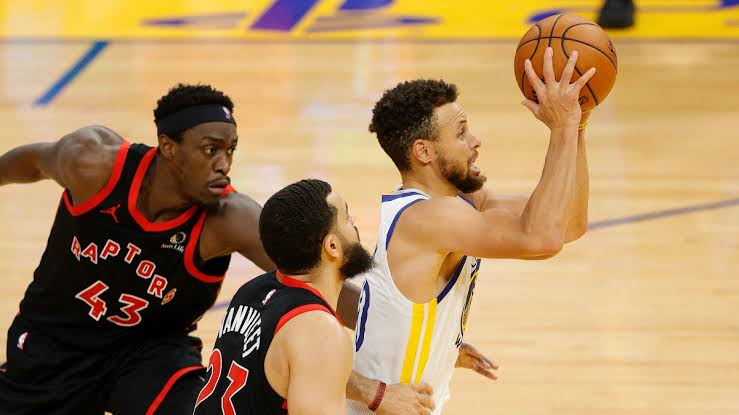
Field Goals at Different Levels of Basketball
NBA
- College and high school are further than three-point line.
- Much focus on three-point field goal.
- Detailed statistics are paid close attention to FG% and location of shots.
College Basketball (NCAA)
- Longer three-point line than NBA.
- Increased attention to team offense and choice of shots.
- One of the key coaching measures is field goal efficiency.
High School Basketball
- Even shorter three-point line.
- An increased focus on the basics such as layups and mid-range shots.
- Field goals are used to learn the basics of scoring.
Common Field Goal Terms You Should Know
FGM: Field Goals Made
FGA: Field Goal Attempts
FG%: Field Goal Percentage
3FG: Three-Point Field Goals
And-One: A field goal that is made following a foul and a free throw.
With a knowledge of these terms, it becomes quite easy to watch and talk about basketball.
Why Understanding Field Goals Matters
A field goal is the foundation of scoring in basketball. From a simple layup to a deep three-pointer at the buzzer, field goals define how games are played and won.
By understanding:
- What a field goal is
- How many points it’s worth
- How it’s tracked and measured.
you gain a deeper appreciation of the game, its strategies, and its players. Whether you’re watching the NBA, college hoops, or a local high school game, field goals are at the heart of basketball action.